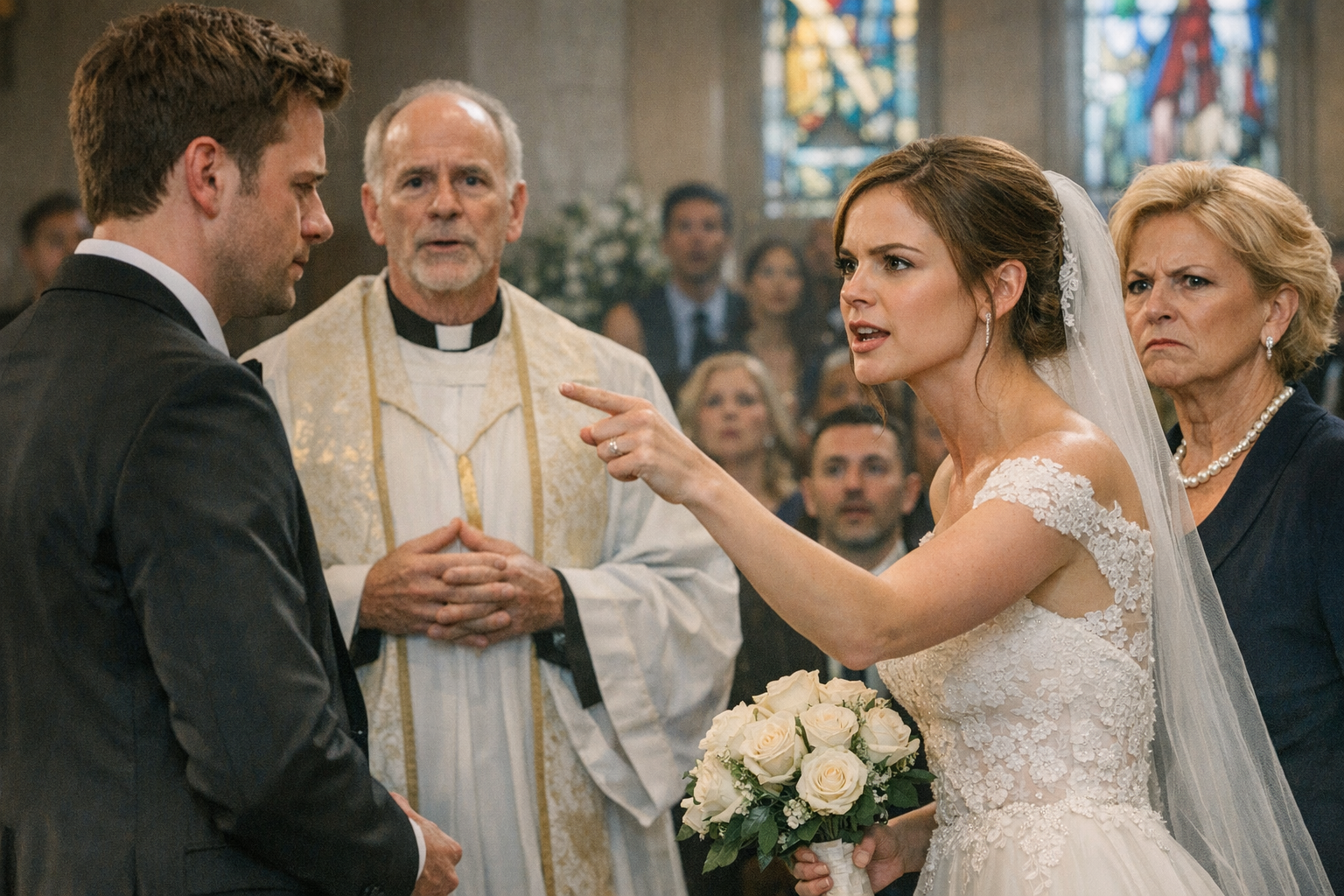
At the altar, just as the ceremony was about to begin, my mother-in-law stepped forward with a neatly wrapped box and an overly sweet smile. “A little wedding gift,” she announced. I opened it in front of everyone.
Inside was a baby bottle.
She leaned closer so the guests could hear her and said, “You’ll need this when he trades you in for a real wife who can actually give him a family.” A few people gasped. A few nervous laughs rippled through the room.
I looked at my husband, waiting for him to say something — anything. A joke, a correction, a defense. He just shifted uncomfortably and stared at the floor.
The ceremony continued, but my hands were shaking. All I could think about were the years of comments — how I dressed wrong, cooked wrong, earned less than her son, wasn’t “maternal enough.” And every time, he’d squeeze my hand later and whisper, “That’s just how she is. Don’t make it a thing.”
When the officiant finally asked, “Do you take this man to be your husband?” I felt strangely calm.
I smiled and said, “No. And I think everyone deserves to know why.”
The room fell silent.
I explained that marriage isn’t just about loving someone on the good days — it’s about knowing they’ll stand beside you on the hard ones. I said I couldn’t marry a man who watched his mother humiliate me at the altar and chose silence over support. I told them this wasn’t about a baby bottle. It was about years of being diminished while he looked the other way.
My mother-in-law tried to interrupt, calling it a joke, saying I was overreacting. He whispered, “Please, let’s talk about this later.” But there had already been too many “laters.”
I handed the bouquet back, stepped away from the altar, and walked down the aisle alone. No dramatic music, no shouting — just the quiet sound of my heels on the floor.
For the first time in a long time, I didn’t feel small. I felt free.